A Brief History of the Hackensack Meadowlands
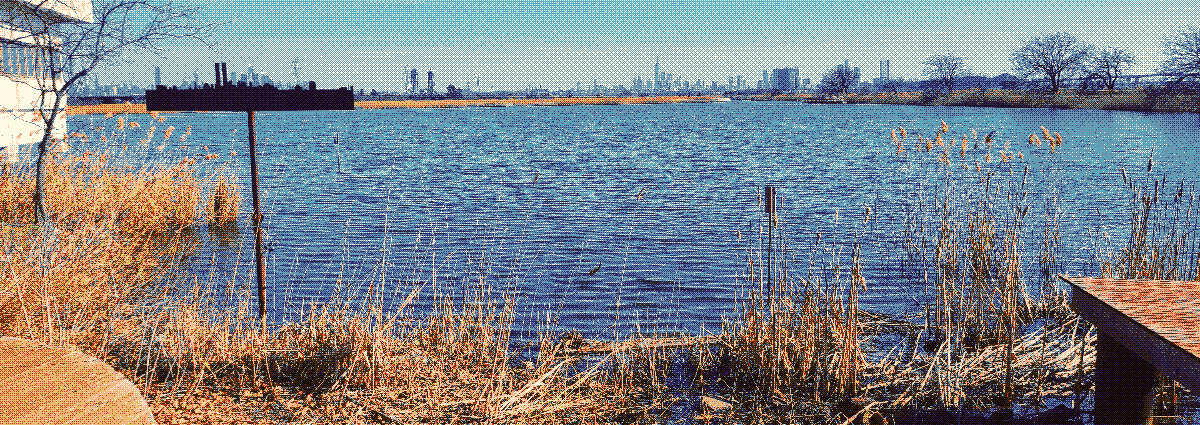
The Hackensack Meadowlands was formed from glaciated plains in Northeastern New Jersey. From this glaciation flattening the lands in the area, a glacial lake was formed during the ice age. The water levels eventually decreased, forming a mixture of Atlantic White Cedar swamps, floodplain forests, and cattail marshes, with varying levels of salt in the water. These diverse plant communities also supported a greater diversity of species than can be seen today. Even today, however, it is an important stop along the way of the migration route of many bird species. Native Americans of the Munsee Lenape tribe made settlements along the Hackensack River: they would hunt and gather food, farm, and use reeds, trees blue clay endemic to the region to make baskets, mats, canoes, and pottery. Their land use did minimal damage to the marshland ecosystem.
European colonisation started to change things. Early settlers started to build dikes in the marshlands, to allow their livestock to feed upon salt hay. The trees were extensively logged to make room for farmland: by 1939 there were no more Atlantic White Cedars left in the region. Settlers largely considered wetland regions "a wasteland," to be dredged and filled in in order to make room for arable land. In the 20th century, industrialisation made the damage even more extensive: much of the marshlands were used for landfill, and dumping of the waste in the Meadowlands was largely unregulated. The area was covered with 51 open landfills. Runoff from the landfills would leach into the water, introducing toxins such as mercury and PCB's. Loose rubbish would also cause other harm to wildlife in the area, such as strangulation in plastic netting and choking on rubbish that has been confused for food.
In more recent times, there have been efforts to preserve what remains of the wetlands. The Hackensack Meadowlands Development Commission was formed in 1969 to better regulate dumping. Landfills were cleaned, capped, and eventually there were no more operating landfills in the region. Several areas of land are preserved and maintained by organisations such as the Meadowlands Commission: the area is now dotted with parks where areas of marshland remain. Much of these marshlands contain a monoculture of invasive phragmites, but attempts are being made to re-introduce more native plants such as Spartina grass and Cattails. The region is now home to 275 plant species, 50 species of fish, 25 species of reptiles, and 24 species of mammals. On top of that, over 280 species of birds are found there, and many migrate through the area every year, stopping over at the marshes on their routes to forage for food.
Birds of the Meadowlands
What is currently extant of the meadowlands supports a variety of waterfowl and wading birds, which search for food in the creeks and streams of the marshes. Those that are present during breeding season also often use the marshes to raise their young. Many land birds also migrate over the meadowlands, using it as a stopover to fuel their long journeys. Some of the land birds are present year round, like Song Sparrows and Swamp Sparrows. The main threats to the diversity of avian species at present tends to be pollution from the urban environments and industrial plants surrounding them, as well as invasive species like Phragmites, which forms monocultures and chokes out native plants.
Endangered and Threatened Species
| Conservation Concern | Species |
|---|---|
| NJ-Endangered | Northern Harrier, Pied Billed Grebe, Peregrine Falcon |
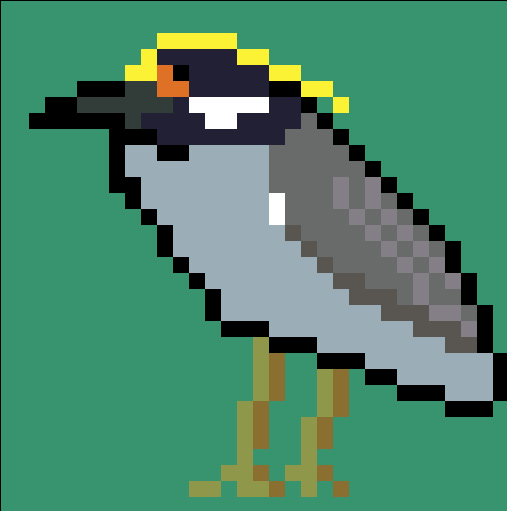
| NJ-Threatened | Black Crowned Night Heron, Yellow Crowned Night Heron |
| NJ-Special Concern | Bobolink |
| NJ-Conservation priority | Snowy Egret, Canvasback |
Parks to Explore
- Richard W. De Korte Park
- Teaneck Creek Conservancy
- Mill Creek Marsh Nature Trail
- Losen Slote Creek Park
- Laurel Hill County Park
- Demarest Nature Centre
- Emerson Woods Preserve
- Skeetkill Marsh